Distribution of Electrons – Bohr’s & Bury Principle
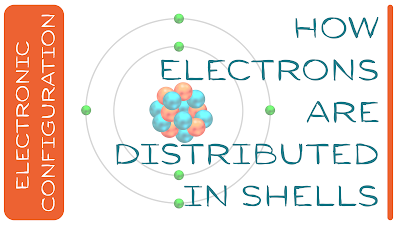
According to the Bohr–Bury scheme, electrons revolve around the nucleus in fixed paths called shells or orbits. These shells are named K, L, M, N, etc. Each shell can hold only a certain maximum number of electrons.
Bohr and Bury proposed the following rules for the distribution of electrons in different shells:
1. Maximum Number of Electrons in a Shell
The maximum number of electrons that can be accommodated in a shell is given by the formula:
2n22n^2
where n represents the shell number.
| Shell | Value of n | Maximum Electrons |
|---|---|---|
| K Shell | 1 | 2 × 1² = 2 |
| L Shell | 2 | 2 × 2² = 8 |
| M Shell | 3 | 2 × 3² = 18 |
| N Shell | 4 | 2 × 4² = 32 |
2. Maximum Electrons in the Valence Shell
The outermost shell of an atom is called the valence shell. According to the Bohr–Bury rule:
- The valence shell cannot contain more than 8 electrons.
3. Starting of a New Shell
If adding more electrons would make the outermost shell exceed 8 electrons, a new shell begins to fill.
For example:
-
Potassium (Atomic Number 19) has the electronic configuration:
2, 8, 8, 1
Instead of filling 9 electrons in the M shell, the next electron enters the N shell.
4. Maximum Electrons in the Penultimate Shell
The penultimate shell means the second outermost shell.
- The penultimate shell cannot have more than 18 electrons.
Electronic Configuration of the First 20 Elements
| Atomic Number | Element | Electronic Configuration |
|---|---|---|
| 1 | Hydrogen (H) | 1 |
| 2 | Helium (He) | 2 |
| 3 | Lithium (Li) | 2, 1 |
| 4 | Beryllium (Be) | 2, 2 |
| 5 | Boron (B) | 2, 3 |
| 6 | Carbon (C) | 2, 4 |
| 7 | Nitrogen (N) | 2, 5 |
| 8 | Oxygen (O) | 2, 6 |
| 9 | Fluorine (F) | 2, 7 |
| 10 | Neon (Ne) | 2, 8 |
| 11 | Sodium (Na) | 2, 8, 1 |
| 12 | Magnesium (Mg) | 2, 8, 2 |
| 13 | Aluminium (Al) | 2, 8, 3 |
| 14 | Silicon (Si) | 2, 8, 4 |
| 15 | Phosphorus (P) | 2, 8, 5 |
| 16 | Sulphur (S) | 2, 8, 6 |
| 17 | Chlorine (Cl) | 2, 8, 7 |
| 18 | Argon (Ar) | 2, 8, 8 |
| 19 | Potassium (K) | 2, 8, 8, 1 |
| 20 | Calcium (Ca) | 2, 8, 8, 2 |
Quick Revision Points
 Electrons move in fixed shells around the nucleus. Maximum electrons in a shell = 2n² Valence shell cannot have more than 8 electrons. Penultimate shell cannot have more than 18 electrons. Electronic configuration helps us understand the arrangement of electrons in an atom.